 Gen AI Innovation
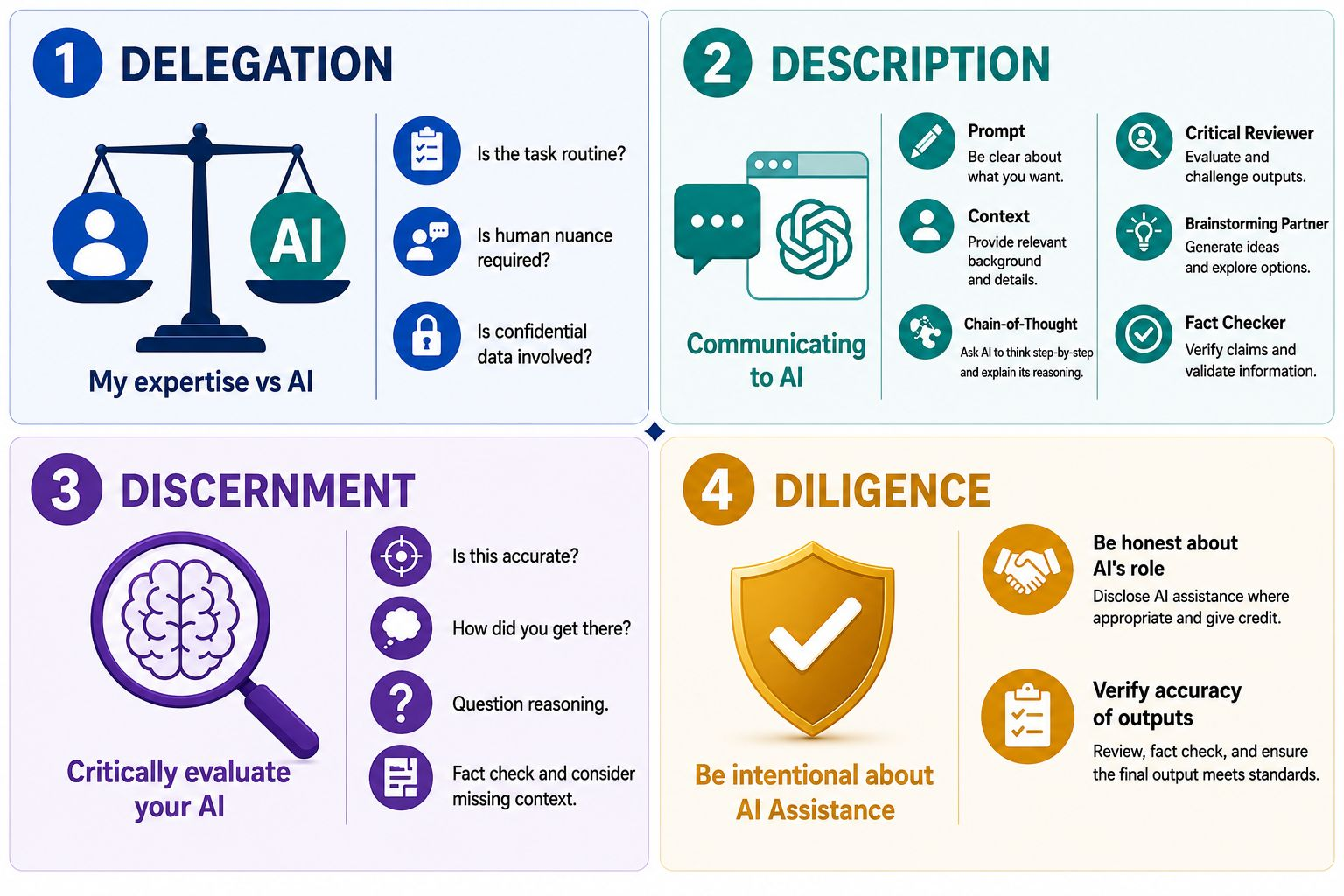
Most businesses troubleshoot a bad AI outcome by asking which tool to switch to. In my experience, that's usually the wrong question. In almost every AI failure I've looked at, the tool wasn't the weak link, one of four very human decisions was.
Delegation
The first failure point isn't using AI badly. It's deciding to use it at all for the wrong thing.
Delegating the first draft of a document is different from delegating the judgement call about whether that document is ready to send. The first is a time-saver. The second is how things end up in front of a client, or a court, with nobody having actually decided they were correct.
Good delegation comes down to a few honest questions before you hand anything over: Is the task routine, or does it need human nuance? Is confidential data involved? Knowing which part of the task you can hand over, and which part stays yours, is a decision you make every time, not a setting you choose once.
Description
AI output quality tracks the quality of what you handed it, almost exactly. Most people give a model less context than they'd give a new employee on their first day at the desk next to them, then treat a mediocre result as proof the technology isn't ready.
It's not a magic box you whisper a sentence into. It's a very capable, but entirely literal, collaborator that only knows what you actually told it. Being clear about what you want, giving it relevant background and detail, and asking it to think step-by-step and explain its reasoning, these aren't nice-to-haves, they're the difference between a first draft you can use and one you have to rewrite from scratch.
It also helps to be specific about the role you need from it in the moment, sometimes a critical reviewer challenging your own thinking, sometimes a brainstorming partner generating options, sometimes a fact-checker verifying a claim you're not sure of. Naming which one you need changes what comes back.
Discernment
This is the one almost nobody trains for, and it's the one that matters most.
AI doesn't sound less confident when it's wrong. A fabricated case citation reads exactly as polished as a real one. A plausible-but-incorrect number sits in a spreadsheet looking exactly as plausible as a correct one. There's no tell, no hedge in the tone, no visual cue that says "check this one more carefully."
Discernment is the skill of reading the output the way you'd read a junior colleague's work you don't yet fully trust, asking whether it's accurate, how it got there, questioning the reasoning, fact-checking it, and noticing what context might be missing, rather than the skill of reading it the way you'd read something already stamped "verified."
Diligence
And then, separately from discernment, there's actually doing something about it.
Spotting a problem and fixing it before it goes out the door are two different muscles, and the second one is the one that quietly disappears under deadline pressure. Diligence is the tedious habit of checking, even on the ninth thing this week that looked fine on the first eight. It's also being honest about AI's role in the work: disclosing its assistance where appropriate, giving credit where it's due, and verifying the final output actually meets the standard before it has your name on it.
Why This Matters More Than the Tool
None of these four are about the AI. They're about the person sitting in front of it.
Which is, honestly, the more useful way to think about it, because a model update can change what a tool is capable of, but it can't change whether you delegated the right thing, described it properly, read the output with the right amount of suspicion, or actually went back and checked. Those four are entirely on you, every time, regardless of which AI you're using.