 Gen AI Innovation
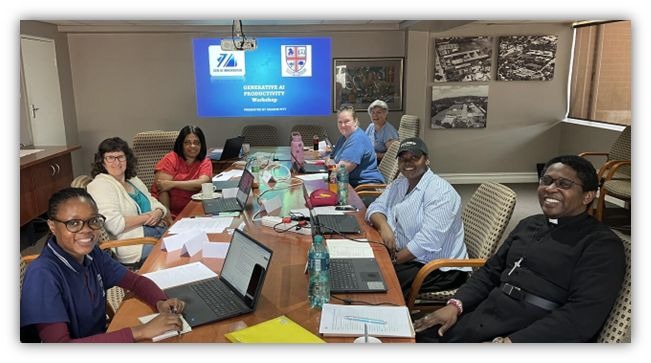
While many in education are watching the AI revolution from the sidelines, a group of pioneering educators at Westville Girls' High School took a different approach entirely. They didn't wait for the future to happen to them. They built it themselves, in a single workshop.
I recently had the privilege of facilitating the Generative AI Productivity Workshop for Educators with this group of teachers who chose to lead rather than wait. Through the session, they moved from tentative observers to confident architects of their own teaching materials.
The Vanguard of Educational Change
What made this group remarkable wasn't simply that they learned to use AI tools. It was how quickly they became sophisticated users. While others are still debating AI's role in education in principle, these teachers were already:
- Designing dynamic, differentiated lesson plans in minutes instead of hours
- Creating comprehensive exam papers with a level of efficiency that used to take days
- Developing custom learning materials tailored to genuinely diverse student needs
From Uncertainty to Leadership, in Numbers
The transformation was both rapid and measurable. We surveyed teacher confidence out of 10, before and after the training, and the numbers tell their own story:
- Confidence soared from 1 to 8 on general AI confidence
- Practical application confidence leapt from 2 to 7
- AI integration skills jumped from 4 to 10
Numbers like that don't happen from exposure alone. They happen when people are shown exactly how to apply something to their own real work, in their own subject, on the same day they learn it.
In Their Own Words
Simphiwe Shange, who teaches English, History, and IsiZulu, captured the mindset shift precisely: "Before the training I was sceptical about the use of AI in teaching and learning… However, since learning, I have gained positive results and am growing in confidence on my lesson plans and a much-improved skill in examination setting."
Carin Steele (Business Studies and EMS) put her finger on the core competency that made the difference: "My biggest takeaway from the day was just how specific I need to be in the prompts that I use."
Nompumelelo Zuma (Geography, Coding and Robotics) put the efficiency gain in concrete terms, creating an entire final exam paper in less than an hour.
Sibongile Nkosi (IsiZulu) framed it in terms of what it means for her students, noting that these AI skills "will enhance my teaching and add value to my lessons."
Prompt Craft as the Real Superpower
These educators didn't stop at basic commands. They moved into genuinely sophisticated technique: Layered Prompting and the CRAFT Method, turning vague ideas into precise, curriculum-aligned teaching materials. Carin's comment above is really the whole lesson in miniature: specificity in the prompt is what separates a generic AI output from one that's actually usable in a real classroom, on a real syllabus, for real students.
Why This Matters Beyond the Classroom
The success of these educators proves something worth holding onto: teachers who embrace AI properly aren't being replaced by it. They're becoming more essential than ever, developing exactly the kind of AI digital literacy that will define educational leadership for the next generation of students.
The future of education isn't something that happens to teachers. It's something they create, and this group just showed what that looks like in practice.