 Gen AI Innovation
The business leaders who are actually measuring the impact of their AI initiatives are the ones seeing real results. Not the ones who assume AI is helping. The ones who check.
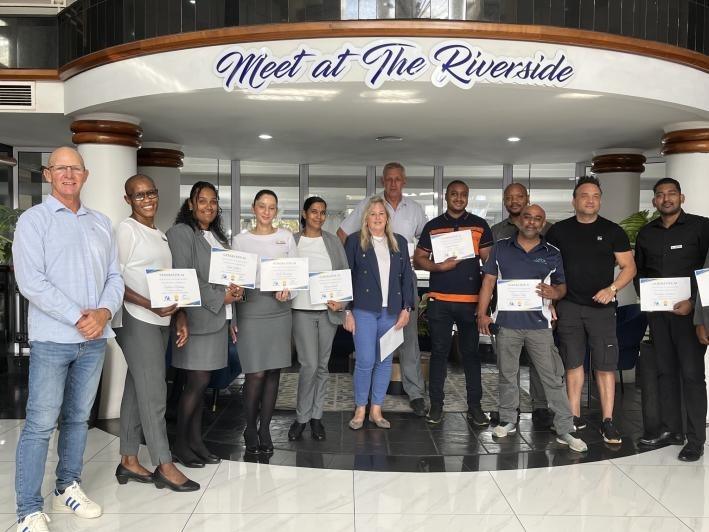
In March 2026, The Riverside Hotel put their entire management team through our 6-hour Gen AI Innovation Productivity Workshop. Thirty days later, COO Primrose Khumalo shared the numbers, and they made the case better than I ever could in a workshop pitch.
The Headline Results
- 60–70% reduction in reporting time
- 50% faster SOP management
- 50–70% productivity gain in Sales & Marketing
- 5–10% improvement in direct booking conversion
- A 90,000+ contact database, cleaned and reactivated by AI
- A 4-year board report, compiled from raw data in under an hour
Numbers like these invite skepticism, and they should. So it's worth looking at where they actually came from.
Where the Time Actually Went
Reporting saw the single biggest gain, 65% faster, department-wide. SOP management and guest feedback both improved by roughly half. Roster planning came in at 40–50% more efficient, and even procurement, the slowest-moving area, saw a measurable gain.
Tasks that used to eat two to three hours were, in Primrose's words, done in under one. That's not a rounding error. That's an afternoon back.
Adoption Wasn't Even, and That's Useful Information
Sales & Marketing led adoption at 70%, with a 50–70% productivity gain and campaign turnaround dropping from days to minutes. Finance & Reporting followed close behind. Front Office, Housekeeping, and F&B all showed solid gains, in that order. Maintenance sat at just 15%, early stage, still being integrated.
That spread isn't a failure of the workshop. It's exactly what you'd expect, and exactly why it's worth tracking department by department rather than reporting one company-wide average. Teams closer to guest communication and data-heavy admin work adopted fastest. Teams with more hands-on, physical workflows are taking longer, which tells you where the next round of support needs to go, not that the training didn't work.
A Real Decision, Not Just a Metric
The clearest illustration of the shift wasn't a percentage, it was a specific decision. The hotel had a consistent mid-week dip against strong weekend demand from local staycation guests. Four years of historical occupancy data was pulled together into a board-ready report in under an hour, instead of the days that kind of analysis used to take.
That report led directly to a tailored "Ultimate Package" targeting local guests, and to improved weekend occupancy and higher ancillary spend per guest, faster than any previous initiative the hotel had tried.
That's the pattern worth noticing: AI didn't make the decision. It made the decision possible to reach quickly, with real data behind it instead of instinct alone.
The Honest Part: What Didn't Go Smoothly
It's worth including the friction, because a business case without any is a marketing document, not a business case.
Adoption varied by department, largely tracking workflow habits and confidence rather than willingness. There's a genuine risk of over-reliance on AI-generated output, especially anything guest-facing, which is why human validation stays part of the process. Departments using inconsistent data formats produced lower-quality AI insights than departments with clean, structured input. And prompting literacy itself varied, not everyone builds that skill at the same pace, which is exactly why structured practice, not a single workshop day, is what makes it stick.
None of that undermines the results. It's what makes them credible.
The ROI, in Plain Terms
The workshop itself: one full day, R1,500 per delegate, online or in-person, customised to each team's actual roles. Thirty days later: a reported average of 90 minutes saved per delegate, per day.
The Riverside Hotel's own targets for the next three to six months are a further 10–15% reduction in admin time, a 15% improvement in RevPAR and ADR, a 5% increase in online review scores, and 70% consistent AI usage across the full management team, each one tied to a specific tracking method, not a hopeful guess.
In Primrose's Words
"I now use AI to quickly review occupancy, pricing, and guest feedback, which helps me make quicker decisions on room rates and operations. Guest complaints are easier to analyse, so I can fix root causes instead of reacting to each issue. Overall, I spend less time on admin and more time focusing on guest experience and team performance."
The Actual Takeaway
The Riverside Hotel's experience shows that a single, well-designed AI productivity workshop can deliver measurable, multi-dimensional return within 30 days, across operations, revenue, guest experience, and strategic decision-making. But the key differentiator was never the technology itself. It was the training, the frameworks, and the confidence to apply AI purposefully to a real business problem instead of a generic one.
What gets tracked gets improved. The Riverside Hotel tracked it, and now they know exactly what they're getting back.