 Gen AI Innovation
"I am amazed by what AI can do, but I'm sad that our children won't learn to think because of AI."
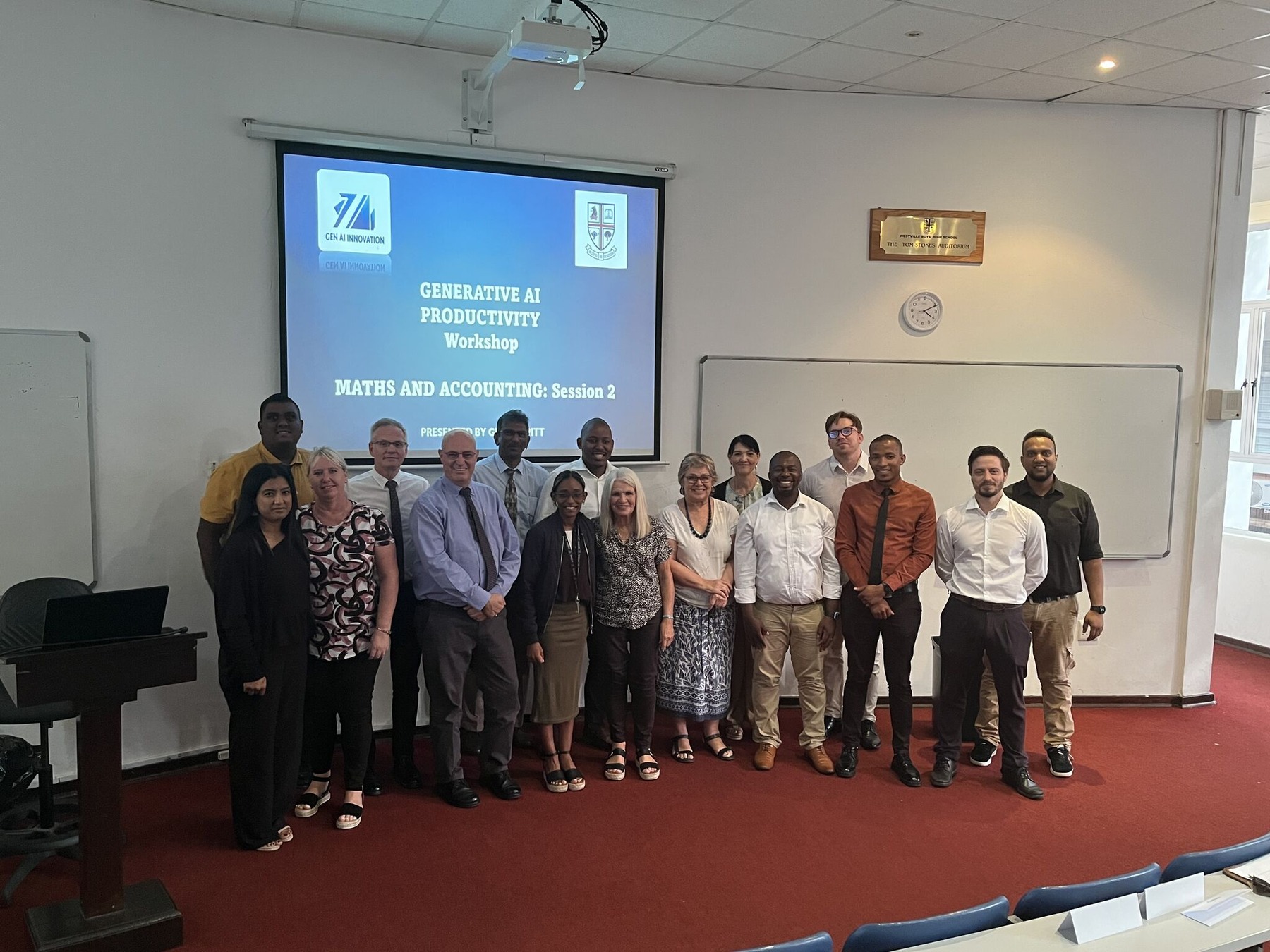
That was a teacher speaking at the end of our Generative AI for Educators Workshop this week, at one of the leading high schools in the country. It's a common perception, and an honest one. It's also worth sitting with properly instead of dismissing it.
So what does the future actually hold, and what can we do to shape it for the better?
One Truth, After Enough Workshops
After facilitating several Generative AI workshops for educators, one thing has become crystal clear: we can't teach our students to thrive alongside AI until we understand it ourselves. Not "understand" in the sense of knowing which button to click. Understand in the sense of genuinely grasping what it's good at, what it isn't, and where it changes what teaching needs to look like.
That's the whole framework, in two steps.
Step 1: Teacher AI Literacy
Before AI can be integrated into a classroom responsibly, teachers need to:
- Understand how AI actually works, not just how to use it
- Know which models serve which purposes
- Master AI question framing and contextualising
- Critically evaluate AI outputs for bias, accuracy, and ethics
This step isn't optional groundwork to rush through. It's the foundation everything else stands on. A teacher who can't critically evaluate an AI output themselves can't teach a student to do it either.
Step 2: Cultivating Irreplaceable Human Skills
Once teachers are properly equipped, the focus shifts to the skills that make students genuinely invaluable in an AI-augmented world:
Cognitive skills: critical thinking, creative problem-solving, and the curiosity to keep learning and unlearning as things change.
Social and emotional intelligence: empathy, interpersonal communication, and the ability to build genuine human connection.
Ethical agency and leadership: moral judgement, visionary leadership, and the resilience to steer technology with human-centred values rather than be steered by it.
The Part That Answers That Teacher's Worry
Here's the direct answer to the concern that opened this piece: AI makes these human skills more essential, not less. As AI takes on routine and even complex cognitive tasks, our uniquely human capacities, compassion, creativity, innovation, ethical reasoning, adaptive leadership, become our greatest professional assets, not a nostalgic afterthought.
That's true in education, and it's just as true in business. The students who learn to think critically, work through ambiguity, and lead with judgement won't be replaced by AI. They'll be the ones directing it.
Who Drives This
Teachers and business leaders will drive the change toward a better future through responsible, informed use of AI, not by avoiding it, and not by handing it the classroom unsupervised, but by teaching the literacy first and building the irreplaceably human skills on top of it.
That teacher's sadness wasn't wrong to feel. It was a sign she cares about exactly the right thing. The answer isn't less AI in the classroom. It's teaching with enough clarity that the thinking never stops being the point.